
Maternity clothes are built differently, and once you try them, you will understand why. The stretchy belly panels, soft waistbands, and roomier cuts move with your body, which makes a difference as you go from one trimester to the next. As for when to start shopping, most moms find that somewhere between weeks 14 and 16 is the sweet spot. When you do start building your wardrobe, keep it simple and focus on versatile basics like leggings, tops, and dresses in breathable fabrics like cotton and modal.
Finding out I was pregnant for the first time was one of the best moments of my life. But a few weeks in, I started noticing that nothing in my closet was fitting the way it used to. My favorite jeans would not button anymore, my blouses pulled across my belly, and clothes I had worn for years suddenly felt wrong on my body. That is when I started exploring maternity clothes and quickly understood how much the right pieces can change your day-to-day experience during pregnancy.
In this guide I am sharing everything I personally wish I had known before building my maternity wardrobe. What makes these clothes different, when to start buying, where to spend and where to save, what to avoid, and how to feel like yourself through every trimester. I hope it makes the whole process a little easier for you.
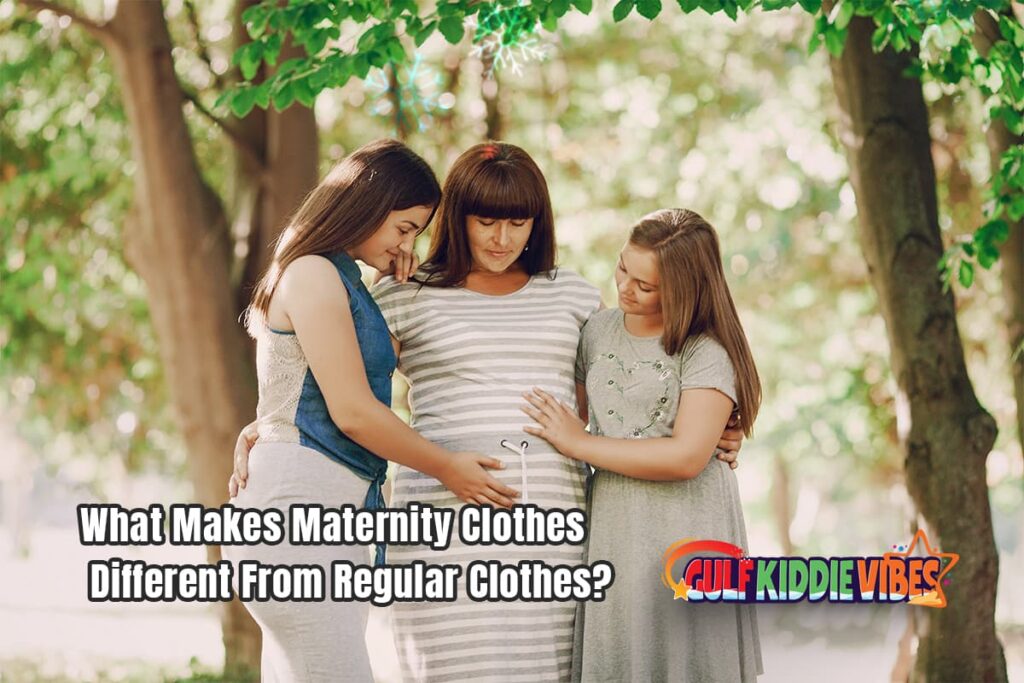
Maternity clothes are not just about covering a bump. They are designed around how a pregnant body moves, changes, and feels through every stage, and that is what sets them apart from anything else in your wardrobe.
When I first looked at maternity clothes, I thought they were just regular clothes in bigger sizes. That was my first wrong assumption. These pieces are made to move and grow with your body throughout pregnancy, with stretchy fabric panels around the belly, soft elastic waistbands, and extra room where you need it most.
The fabric also feels noticeably gentle against your skin, which you will start to appreciate more than you expect once hormonal changes, sweating, and skin sensitivity become part of your everyday routine.
These design details are small, but they make getting dressed each day a lot easier.
I tried this myself, and it just does not work. When you size up in regular clothes, the extra fabric ends up in all the wrong places. The shoulders sit too wide, the back feels baggy, and the belly area still does not have the right support.
Maternity clothes are cut differently to actually fit the shape of a pregnant body, which no regular clothing can replicate, no matter what size you buy. Regular clothes also use stiffer fabrics that do not stretch the right way, so even if the size fits loosely at first, as your bump grows, you will find yourself uncomfortable and restricted. Maternity clothes are designed to accommodate your body through every stage, not just one specific moment.
One thing I love about good maternity clothes is that many of them are designed with nursing openings, making them useful long after your baby arrives.
From tops to dresses, these little openings allow easy access for breastfeeding without having to undress completely, which is such a practical feature, especially when you are out in public.
Many maternity pieces are made from soft, breathable cotton fabrics with flexible cuts that fit a non-pregnant body just as well. This means you can continue wearing them as part of your everyday wardrobe long after the baby stage is over. When you think about it that way, investing in good-quality maternity clothes makes a lot of sense.
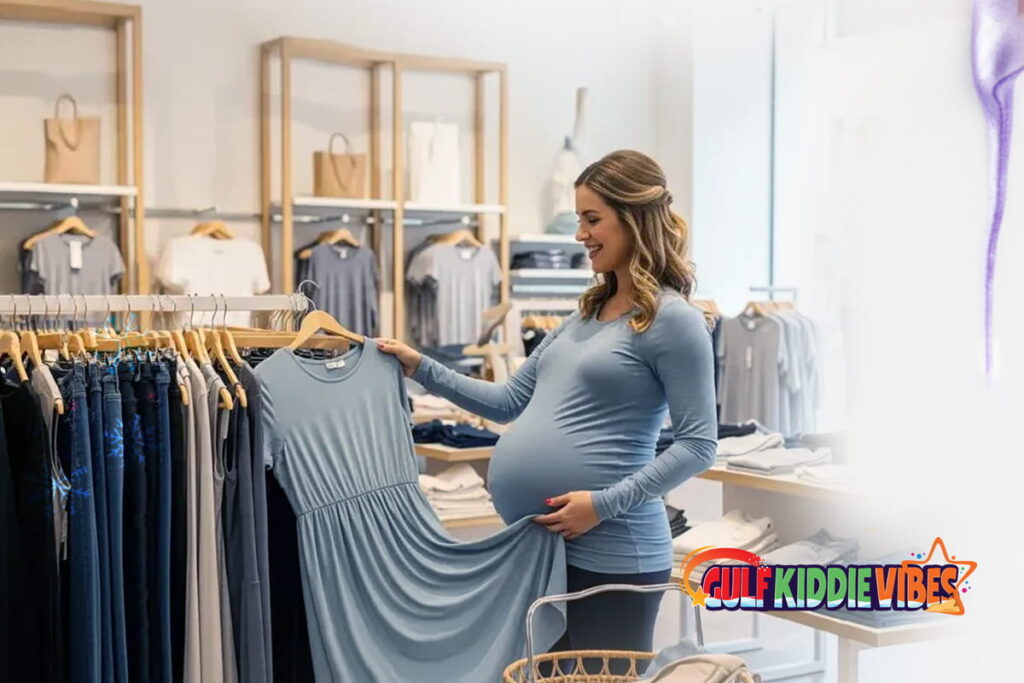
The answer is different for every woman. Your body changes at its own pace during pregnancy, and your wardrobe needs to keep up with that. Knowing what to buy and when can save you from spending money too early or scrambling too late.
In the first trimester, most of the changes happening in your body are not very visible from the outside. Your belly is not showing much yet, but you may notice your bra feeling tighter or some mild bloating around your waist.
At this stage, you honestly do not need to rush out and buy a full maternity wardrobe. Most women get through the first trimester comfortably in their regular clothes, sometimes just going up one size in basics like leggings or loose tops.
The one thing worth picking up early is a good supportive maternity bra, because your breasts start changing quite early in pregnancy, and the right support makes a real difference.
Around weeks 14 to 16, your regular clothes will start feeling noticeably tight, especially around the belly and waist. This is really the right time to start building your maternity wardrobe.
You will wear these pieces the longest, so it makes sense to invest now. Think good maternity jeans, everyday tops, a couple of dresses, and some soft cotton loungewear for home.
By the third trimester, comfort is all that matters. Your bump is at its biggest and even some of your maternity clothes may start feeling snug. This is not the time to spend heavily on new pieces.
Instead, focus on a few practical additions like soft stretchy leggings, loose breathable cotton dresses, and comfortable nightwear. Many women also find that wrap-style dresses and tops with ruching work really well at this stage because they adjust easily to your size and keep you looking put together without any effort.
When I was pregnant, I fell for a few trends that looked amazing on influencers but did not work at all in real life. Oversized boxy tops are a big one. They look effortlessly cool on a non-pregnant body, but on a bump, they just add unnecessary bulk and make you look much larger than you actually are.
Balloon sleeve dresses are another style that gets a lot of attention online, but the extra volume on the arms, combined with a growing belly, can feel overwhelming and unflattering. I also tried a structured blazer dress that was trending heavily, and it was a complete waste of money.
Structured fabrics simply do not stretch or move with your bump the way they need to. The same goes for low-rise bottoms, which sit right under the belly and offer zero support. No matter how stylish they look on a flat stomach, they are genuinely uncomfortable during pregnancy, and you will stop wearing them very quickly.
Shopping for maternity clothes online is easy, but it does come with a few things to watch out for. The biggest issue is sizing. Maternity sizing is not always consistent across brands, so always check the size guide on each individual website rather than assuming your usual size will work.
Pay close attention to fabric descriptions before buying. Words like structured, stiff, or woven are red flags for maternity wear. You want fabrics that are stretchy, soft, and breathable, like cotton, modal, or jersey.
Also, look carefully at return policies before placing an order because some brands do not accept returns on maternity or intimate wear. Reading customer reviews specifically from other pregnant women is one of the most helpful things you can do. They will often mention how the fit changes across trimesters, which is something a product description will never tell you.
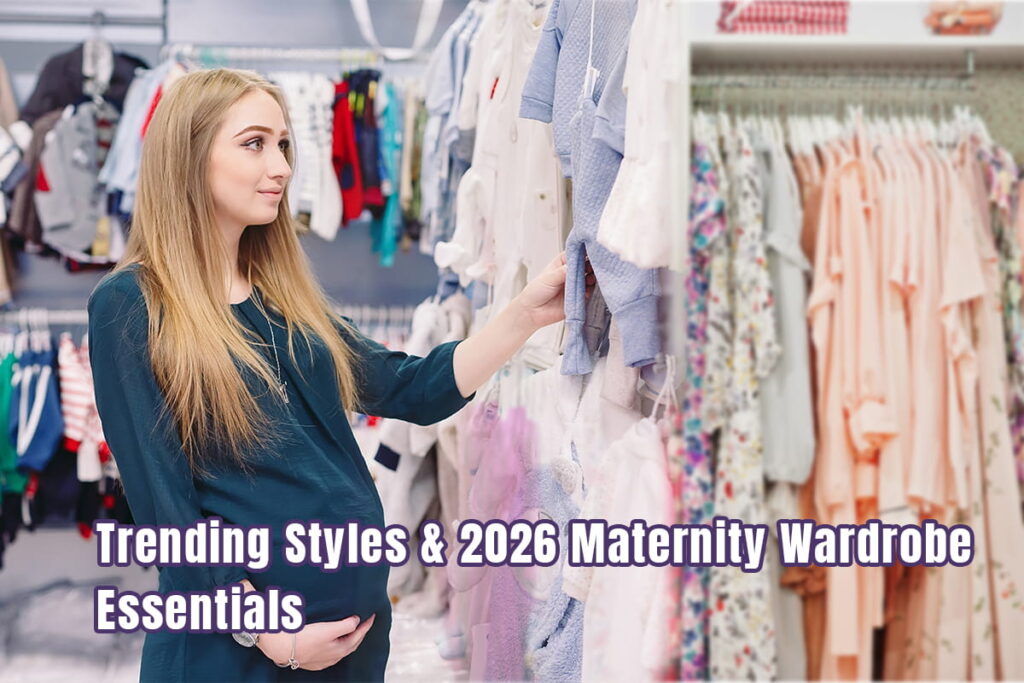
Here is a simple list of what you actually need to get through your pregnancy comfortably and stylishly:
Keep your basics in neutral tones so everything mixes and matches easily. You do not need a huge wardrobe, just the right pieces.
Maternity fashion in 2026 has moved far away from hiding the bump. It is all about celebrating it. Here are the styles that are everywhere right now:
Still the number one maternity staple. Brands like HATCH, Seraphine, and Isabella Oliver do these really well. They hug the bump beautifully, work across all trimesters, and can be dressed up or down easily.
Relaxed blazers in soft, unstructured fabrics paired with wide-leg maternity trousers are really popular right now. They work well for office wear or smart casual looks. Seraphine and ASOS Maternity both have some good options worth checking out.
Camel, ivory, warm brown, and soft terracotta are the colors dominating maternity fashion this year. They photograph beautifully and work across all seasons.
Wrap dresses and wrap tops are incredibly flattering on a bump at any stage. They adjust naturally as your body changes, which makes them a very practical investment.
Comfortable matching sets in soft cotton or jersey fabric are trending heavily. Brands like Boob Design and Storq do these really well, and they work just as well postpartum.
Soft-fitted knit tops and dresses that gently hug the bump are very popular in 2026. They look polished and put together with minimal effort.
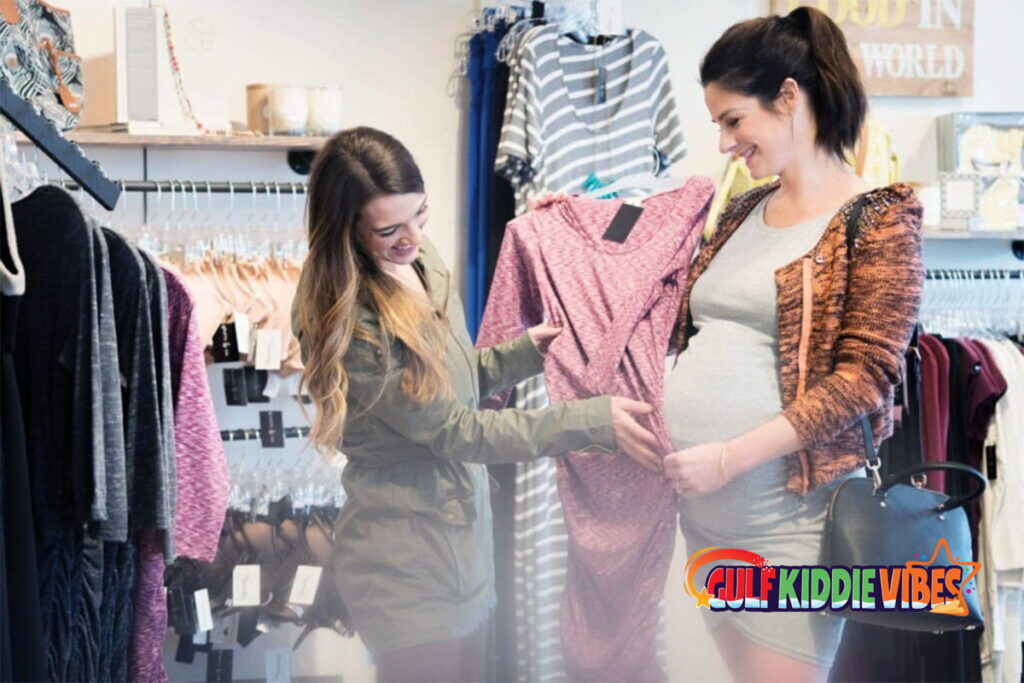
Pregnancy is physically demanding. Between the fatigue, the swelling, the backaches, and the constant body changes, the last thing you need is clothing that adds to that. You need to be very careful about fabric choices during pregnancy.
Natural fabrics like organic cotton, modal, and viscose are soft, breathable, and gentle on sensitive skin. They move with your body, absorb moisture, and keep you comfortable in a way that synthetic fabrics just cannot match.
If you are living in the Gulf region, then this matter needs more attention. The heat and humidity make pregnancy tougher on the body, and heavy or synthetic fabrics will leave you feeling overheated very quickly. Lightweight cotton and viscose in loose, relaxed fits are simply the smarter choice for that climate.
Think flowy cotton dresses, wide-leg trousers, and relaxed tops that give your body room to breathe. Avoid stiff fabrics, tight elastic, and anything that does not stretch because your body is changing every week, and your clothes need to keep up with that.
Most women make the switch somewhere around weeks 12 to 16, when the bump starts showing and regular clothes begin feeling tight around the belly and waist. Some women switch earlier if bloating kicks in during the first trimester.
Not as many as you think. Around 15 to 20 pieces is enough to get through your entire pregnancy comfortably. Stick to versatile basics like leggings, tops, a couple of dresses, and good maternity underwear that you can mix and match easily.
You can in the early weeks, but as your bump grows, regular clothes will not give you the right fit or support. No matter what size you buy, they are simply not cut for a pregnant body.
In most cases, your pre-pregnancy size is the right starting point. These clothes are already made for pregnant women as they grow bigger, so there is no need to size up. That said, always check the brand’s size guide before ordering, as it can differ from one brand to another.
Yes, because the right pieces of maternity clothes can be used through postpartum and nursing as well. It will keep you hassle-free during pregnancy, and many of them will still get plenty of use after your baby is here.
The right maternity clothes do more than just fit your bump. They support your posture, reduce the strain on your back, and keep you physically comfortable through every change your body goes through. As you get closer to your due date, soft stretchy fabrics and relaxed fits make movement easier and day-to-day life a little less tiring.
And beyond the physical side, there is something about putting on a well-fitted, stylish maternity piece that makes you carry yourself differently. You feel put together, you feel like yourself, and that matters more than people give it credit for. Maternity fashion in 2026 is not about hiding your bump or just getting through the months. It is about looking and feeling like the most confident version of yourself, bump and all.