Building a functional kid’s wardrobe is about quality over quantity with pieces that work together and grow with your child. Simplifying their closets transforms mornings and teaches children valuable life skills while saving your sanity.
With three teenage daughters and two toddler boys, most moms assume my house is in constant chaos. “How do you even keep up with all those clothes?” they ask, expecting to hear about piles of laundry on every surface and kids who can never find anything to wear. But their perspective shifts completely when they visit my home. My kids’ wardrobes are tidy, minimalistic, and somehow, everyone finds what they need without tears or tantrums.
“How do you manage this?” becomes the inevitable question. Honestly, it didn’t happen overnight. There were years of struggles: mornings spent searching for matching socks, money wasted on pieces that lasted three washes, closets so stuffed that half the clothes never saw daylight. I experimented with every organization system, tried countless shopping strategies, and made plenty of mistakes along the way.
Through years of trial and error with my five kids, I finally found what works: simplicity. I remember the day I cleared out half of my daughter Sarah’s overflowing closet, and she actually started getting dressed faster in the mornings.
Today, I’m sharing everything I’ve learned from dressing five kids through every stage. If you’re tired of buying clothes your kids refuse to wear, spending 20 minutes every morning finding matching outfits, or wondering why their closet is full but they have ‘nothing to wear’, keep reading.
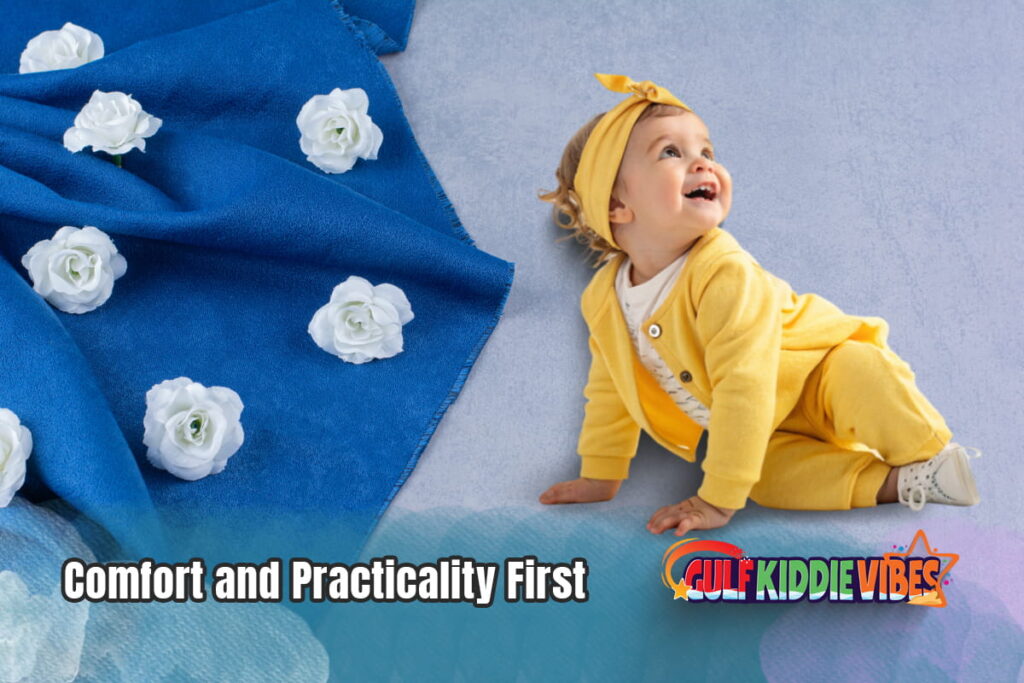
Toddlers are messy, active, and unpredictable. They spill juice on themselves before breakfast, discover muddy puddles like they’re treasure, and treat their clothes like napkins.
So yeah, forget cute outfits with twelve buttons. Buy stuff that can survive spills, mud, and whatever mystery substance just appeared on their shirt.
When my boys were in this stage, I spent fifteen minutes fighting with twelve tiny buttons while my toddler screamed and kicked. Those outfits went straight to donation.
Want proof this matters? My youngest spit up on a $50 designer outfit thirty seconds before our family photo. That was the day I embraced bodysuits and onesies as my foundation. They stay tucked in during all that crawling and climbing, which means no exposed belly when they’re reaching for things they shouldn’t touch.
I kept about 5-7 pairs of stretchy pants or leggings with elastic waists in rotation. Diaper changes happen constantly, and fumbling with buttons and zippers while a squirmy toddler tries to escape just adds unnecessary stress to your day.
Pull-over shirts in soft cotton saved me so much time. Short sleeves, long sleeves, didn’t matter as long as they went on fast.
At this age, kids won’t sit still for outfit changes. My youngest would rather run naked through the house than cooperate with getting dressed, so quick on-and-off mattered way more than looking stylish.
I kept 2-3 comfortable dresses or rompers around for variety, mostly because my mother-in-law liked seeing them in something besides the same three outfits. One light jacket and one warmer option handled most weather situations without taking up too much closet space. My son nearly choked on a decorative button. Now I check every piece before buying: can they rip something off and swallow it? If yes, I don’t buy it.
For footwear, I gave up on anything complicated early on. Simple slip-on shoes or velcro sneakers saved me so much frustration. Tiny fingers can’t tie laces yet, and I wasn’t about to spend my morning wrestling with shoe strings five times before we even got out the door.
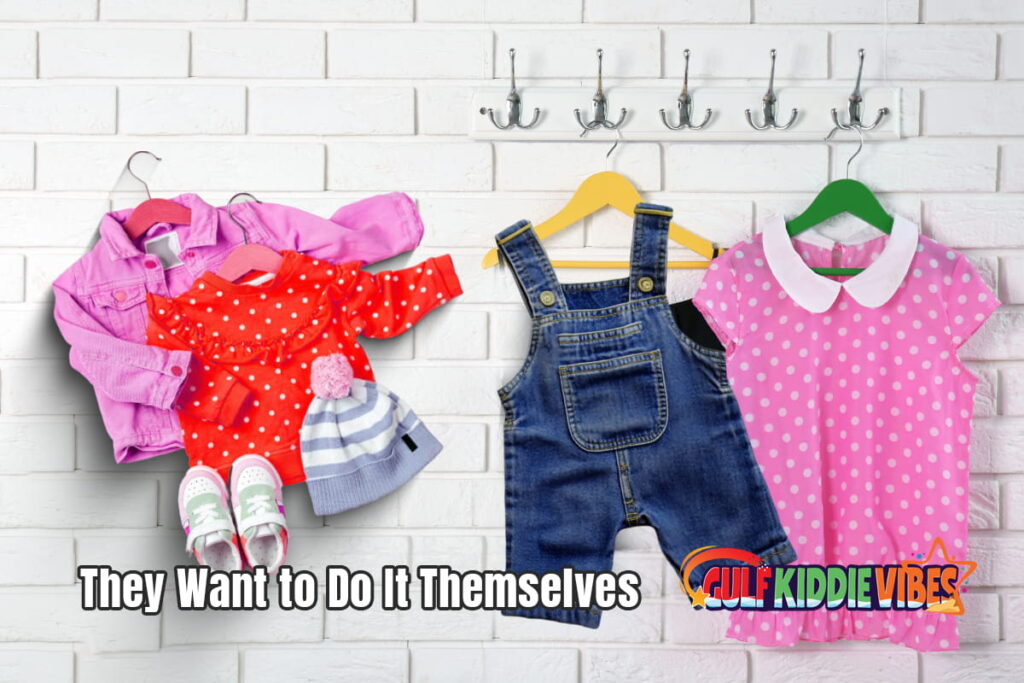
This age group wants to dress themselves, and you’ll find yourself stepping back more than you expected.
My son had a bathroom accident at school because he couldn’t unbutton his pants fast enough. The teacher called me. He was humiliated. I threw out every pair of jeans with small buttons that same afternoon and bought only elastic waists for the next two years.
Six to eight tops. That covers a week with backup for spills. More than that just sits unworn in the closet. T-shirts, polo shirts, and simple sweaters they could pull over their heads without getting stuck. Those worked best. I mixed patterns with solid colors so when my daughter insisted on wearing stripes with polka dots, at least the colors coordinated enough that I didn’t cringe in public. Giving them options that couldn’t clash too badly saved us both from morning arguments.
Elastic waistbands continued to make life easier during these years. I kept 4-6 pairs of pants, shorts, and skirts that they could pull up on their own without calling for help from the bathroom. When I did buy jeans, I made sure the buttons and zippers were large enough for small hands to manage. Nothing derails a confident kid faster than struggling with a tiny button while everyone waits.
Light jackets they could manage themselves taught them to think about weather. My daughter started grabbing her hoodie without me reminding her.
My daughter spills something on her jacket every other day. If I only had one, we’d be screwed. Two keeps us functional.
Underwear and socks needed way more attention than I expected. I kept at least 8-10 pairs of each because accidents still happened occasionally, and playground activities got things dirty remarkably fast. My son once came home with mud-soaked socks three days in a row, and I was grateful to have backups.
Sturdy sneakers for daily wear plus sandals or dress shoes for special occasions covered their footwear needs. They wore through shoes so quickly at this age that I stopped buying trendy styles and focused purely on durability. That expensive character-themed pair might look cute, but it won’t hold up to their energy level.
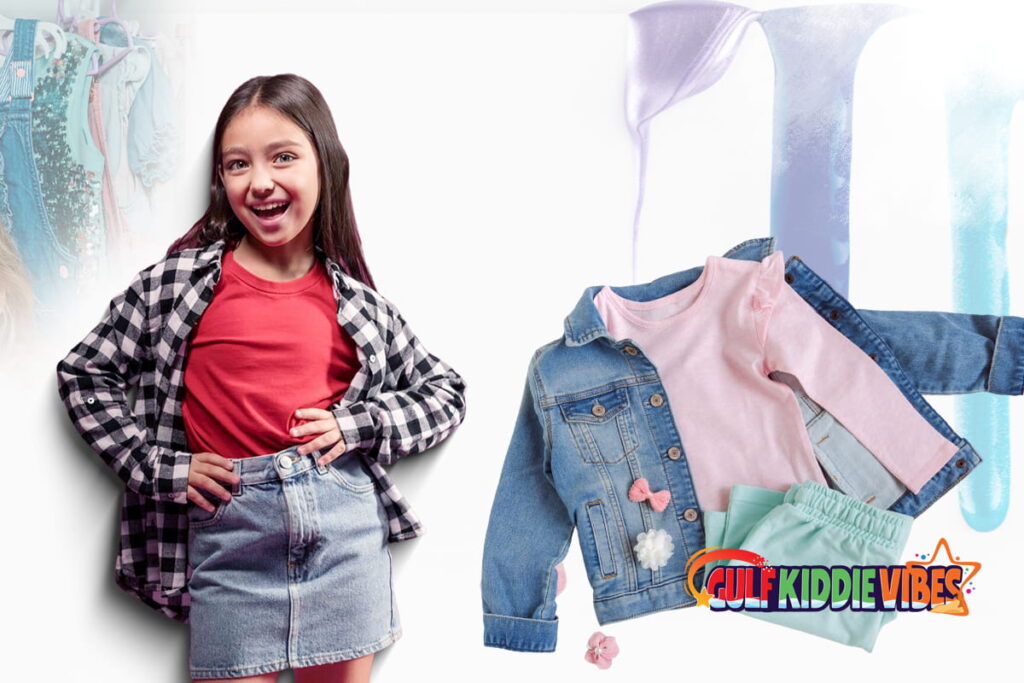
This is the age when everything shifts. My oldest daughter went from happily wearing whatever I picked out to having very strong opinions about every single item in her closet. One morning she declared that none of her clothes felt right anymore, and I realized we’d entered a whole new territory.
These kids develop real personal style preferences. Their school friends, social media, and activities all influence what they want to wear. Wasted roughly $200 on clothes they refused to touch. Now they pick what they’ll actually wear before I buy it.
We kept 7-10 tops in rotation that they actually felt comfortable in. Some days my daughter wanted casual tees, other days she reached for something dressier. Having both options meant fewer morning meltdowns.
She needed more variety in bottoms, jeans for school, athletic shorts for practice, skirts when she felt like dressing up. I kept 5-7 pieces that worked across different settings. My middle daughter had three pairs of black leggings she rotated constantly, so I bought extras as backups. When they find something they love, they’ll wear it until it falls apart.
Sports and hobbies started requiring dedicated clothing. My son needed soccer gear, my daughter wanted specific dance clothes. I created separate spaces for these specialized pieces so they didn’t mix with everyday wear. Even kids not in organized sports needed 2-3 sets of athletic wear for gym class and active play.
Around age 10, my daughters started closing their bedroom doors when changing. They wanted to shop for their own underwear and bras without me hovering. This felt sudden and a bit heartbreaking, but respecting their need for privacy was crucial. I took them to stores, let them browse the sections themselves, and waited nearby without commenting on every choice. We talked openly about what they needed as their bodies changed, but I let them take the lead.
Managing periods added another layer. I kept a small bin in each bathroom with supplies and made sure they had comfortable underwear and extra dark-colored pants or leggings in their closet. My oldest appreciated having these basics handled quietly without big discussions every month. I restocked supplies without asking, respecting that she didn’t always want to talk about it.
The bra conversation was awkward for both of us. We figured out her size, found comfortable styles, and bought a few to start. As she grew, she eventually told me when she needed new ones rather than me constantly checking.
Their outerwear choices mattered more now. They cared about how their jackets and hoodies looked, not just whether they stayed warm. I found functional rain jackets and winter coats in styles they liked, understanding that they’d actually wear something they felt good in.
Her shoe collection grew: athletic shoes for soccer, casual sneakers for school, nicer shoes for family events. I set boundaries on how many pairs we bought.
I found the shopping bags shoved under her bed three months ago. Five crop tops she’d bought with birthday money, tags still on, hidden because she knew I’d say no. Instead of getting angry, we talked about building a wardrobe together. I gave her more input on purchases and explained budget realities. When she understood the financial side, she made more thoughtful choices.
Do I love every outfit they pick? Absolutely not. My daughter wore the same ratty sweatshirt for six days straight last month. But the battles don’t happen now. And honestly, that’s worth her questionable fashion sense
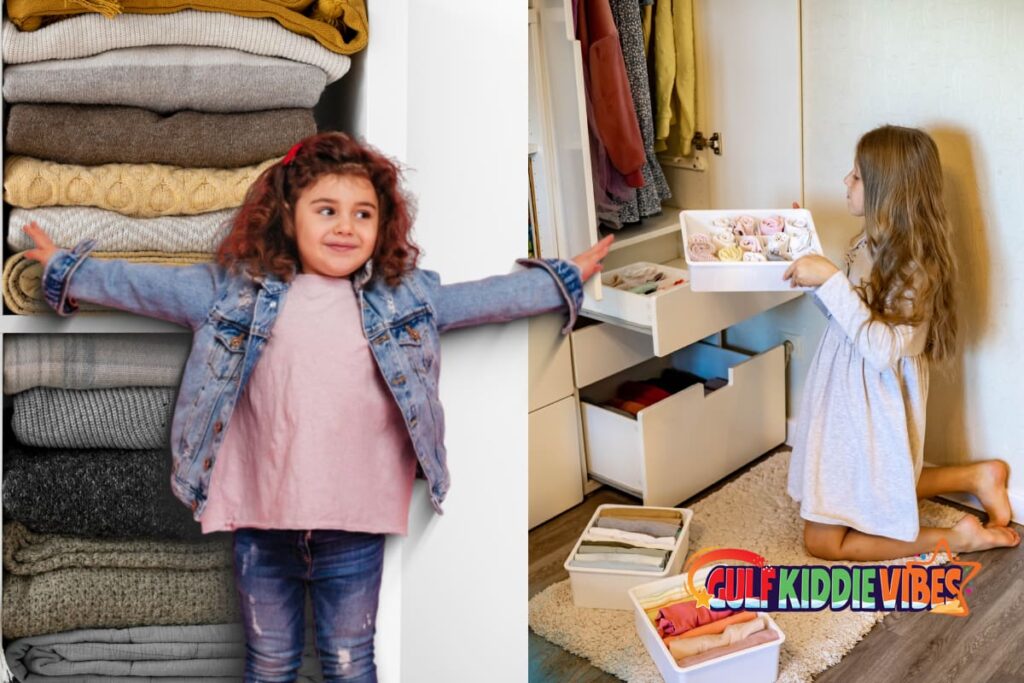
My Daughter’s Capsule Wardrobe
I stumbled into capsule wardrobes out of pure desperation. My daughter’s closet was stuffed with 40+ pieces of clothing. She’d stand there every morning saying ‘I have nothing to wear’ and I’d want to scream.
Then I noticed something. She wore the same six things over and over. The rest just took up space.
So I did something drastic. I pulled out everything except what she actually wore, plus a few pieces that matched those favorites. Donated three garbage bags of clothes she’d worn maybe twice.
Her closet looked empty. I panicked for about a day.
Then mornings got easier. Way easier.
She could grab any shirt and any pants and they worked together. No more ‘this doesn’t match’ meltdowns. No more trying on four outfits before finding one that felt right.
I kept it simple: Black, gray, and navy bottoms. White, gray, and cream tops. Then added her favorite colors, for her it was purple and teal in a few accent pieces.
That’s it. Maybe 20 items total.
My son’s was even simpler. Blue and gray everything. The kid lives in those colors anyway, so I stopped fighting it.
Does this work for every kid? No idea. But for mine, having fewer choices meant less stress. They got dressed faster. They wore everything in their closet instead of ignoring half of it. And I stopped buying random cute things that didn’t go with anything.
We update twice a year now. Before summer, before winter. Takes maybe an hour to see what fits, what’s trashed, and what we need. Then I buy like five new things and we’re done for six months.
They spend their own money smarter now. My 12-year-old won’t buy something unless it matches at least three things she already owns. I didn’t teach her that. She just figured it out when her closet actually made sense.
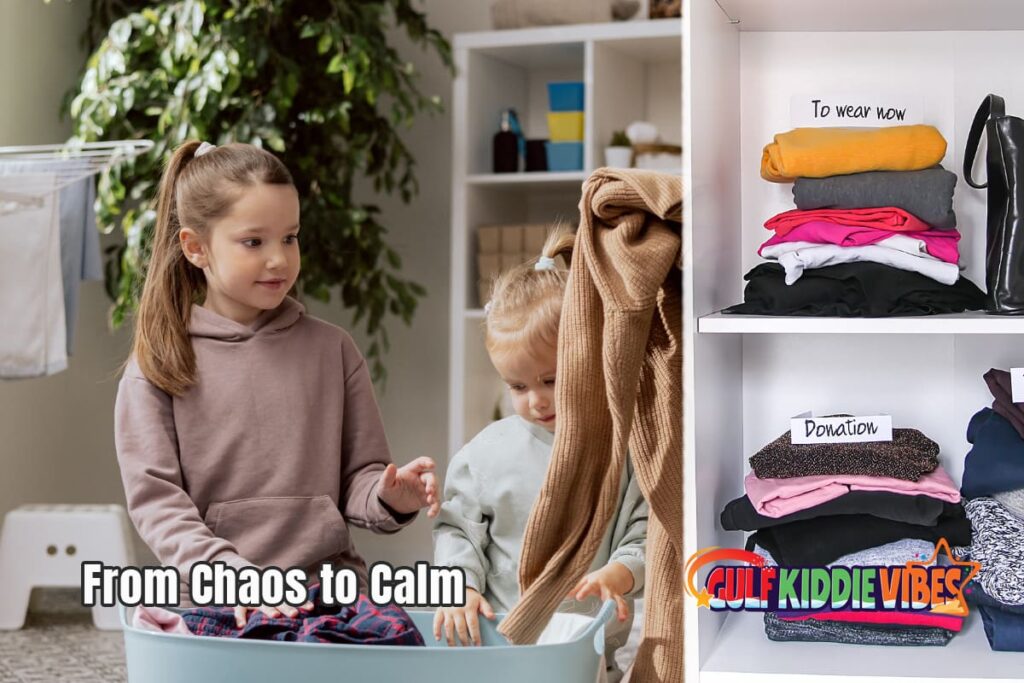
Getting closets organized changed everything for us. I’m not talking about those perfect Instagram closets, just simple systems that work for real families.
The first thing I did was lower the hanging rods. My kids couldn’t reach their clothes, so they’d either ask me for help or just grab whatever was on the floor. Once they could reach everything themselves, mornings got so much easier. Double rods work well too because shorts and shirts don’t need full-length hanging space.
Drawer dividers made a huge difference for smaller items. I designated specific drawers for underwear, socks, pajamas, and accessories, then added picture labels for younger kids and word labels for older ones. They can put away their own laundry now without asking where things go.
I use clear bins for seasonal clothes and special occasion outfits. When winter ended, I packed away heavy sweaters and brought out summer clothes. Off-season clothes stay in bins, so the closet only has what they can actually wear right now.
If your child wears the same three shirts constantly, keep those easily accessible and temporarily store the rest. You avoid morning arguments while still having clean backups.
The one-in-one-out rule keeps things manageable. When new clothes come in, something old goes out. The closet stays under control instead of overflowing with unworn clothes.
For shoes, I added simple racks near the closet floor. Everything has a spot, and we’re not hunting for matches before school anymore.
I spend five minutes each week doing a quick closet check on what needs washing, what’s outgrown, and what’s missing. Five minutes weekly beats a four-hour closet nightmare twice a year.
7-8 tops, 5-6 bottoms, and 10 pairs of underwear and socks covers a week with backups. If you do laundry more often, you need even less.
Cotton and cotton-poly blends: they breathe, wash well, and don’t irritate skin. For sports, get polyester blends that wick sweat.
Lower rods so they can reach their own clothes, use picture labels for drawers, and do quarterly clean-outs of what doesn’t fit. If clothes end up on the floor constantly, your system isn’t working for them.
Spend money on shoes and coats that get worn daily, buy basics cheap since they outgrow them fast. Shop end-of-season sales and sell outgrown items to recover costs.
Pack off-season clothes in labeled bins twice a year after checking what still fits. Bring out next season’s items a few weeks early so you have time to fill gaps before you need them.
Building a good wardrobe for your kids doesn’t have to be complicated. Less clothes means less stress and easier mornings.
I had overflowing closets and chaotic mornings. Then I cleared everything out and kept only what my kids actually wore. Everything changed. Mornings got easier, laundry was manageable, and my kids were happier.
Your kids don’t need a lot of clothes. They need pieces that fit, feel good, and work together. When you have that, everything becomes simpler.
Start with one closet. Get rid of what you don’t need. Organize it so they can find things. See how much better it gets.