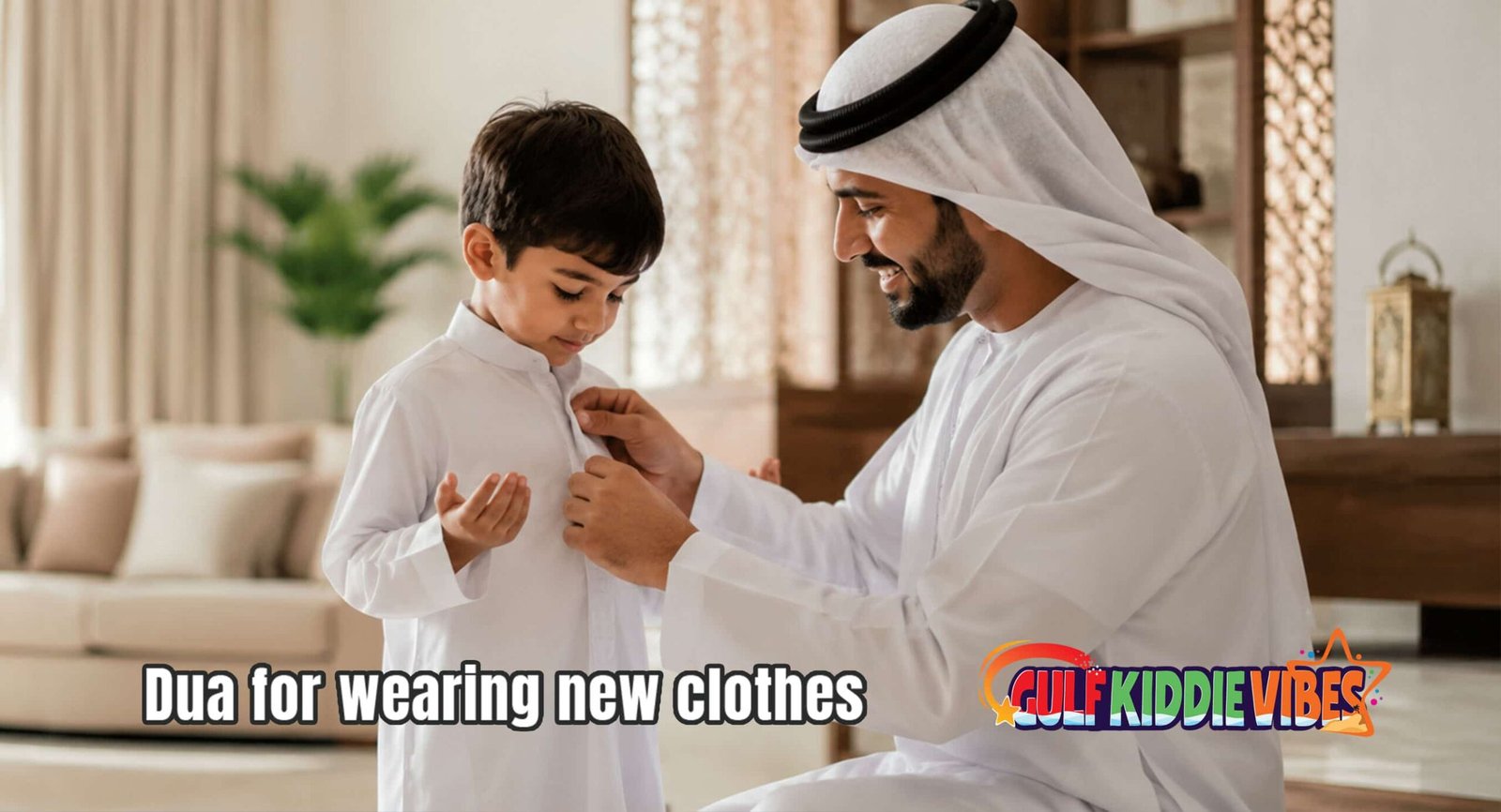
The dua for wearing new clothes is: “Alhamdulillahil-ladhi kasani hadha wa razaqanihi min ghayri hawlin minni wa la quwwah” – All praise is due to Allah who has clothed me with this garment and provided it for me without any power or strength from myself. Recite this when you wear something new for the first time as an act of gratitude and remembrance of Allah.
There’s a beautiful moment in Islamic history that shows us how our Prophet Muhammad ﷺ valued gratitude in everyday life. Whenever he wore new clothes, he would recite a specific dua, not just for expensive items, but as a way of thanking Allah for His blessings.
The Prophet ﷺ was the best of creation, yet he took time to remember Allah even when getting dressed. If something as simple as clothing deserved a dua, it conveys how important gratitude is in Islam.
Dua isn’t only for difficult times or big moments.
It’s meant to be in the littlest part of our daily routine.
When we wake up, when we eat, and when we wear new clothes, these small acts keep our hearts connected to Allah throughout the day.
When you recite the dua for wearing new clothes, you’re acknowledging that everything comes from Allah. You’re building a habit of gratitude that changes how you see the world around you.
In this blog, you’ll learn the authentic dua for wearing new clothes, when to say it, and why it matters.
We’ll also cover the dua for removing clothes, how to teach this to children, and common mistakes to avoid. For any new, fresh outfit, or just a simple outfit that you will wear after a shower, this simple practice can bring barakah into your life.
Wearing new clothes is a blessing from Allah, and Islam teaches us to express gratitude for every blessing we receive.
The Prophet Muhammad ﷺ showed us exactly how to do this through a beautiful dua that takes only a few seconds to recite.
When you wear new clothes, receive sustenance, or remind yourself of the reliance on Allah, the authentic dua taught by the Prophet ﷺ is:
اَلْحَمْدُ لِلّٰهِ الَّذِيْ كَسَانِيْ هٰذَا وَرَزَقَنِيْهِ مِنْ غَيْرِ حَوْلٍ مِّنِّيْ وَلَا قُوَّةٍ
Transliteration: Alhamdulillahil-ladhi kasani hadha wa razaqanihi min ghayri hawlin minni wa la quwwah
Meaning: All praise is due to Allah who has clothed me with this garment and provided it for me without any power or strength from myself.
This recommended (mustahabb) dua comes from authentic hadith collections, Sunan al-Darimi.
Abu Dawud: 4020, At-Tirmidhi: 1767 narrated that the Prophet ﷺ said:
اللَّهُمَّ لَكَ الْحَمْدُ أَنْتَ كَسَوْتَنِيهِ، أَسْأَلُكَ مِنْ خَيْرِهِ وَخَيْرِ مَا صُنِعَ لَهُ، وَأَعُوذُ بِكَ مِنْ شَرِّهِ وَشَرِّ مَا صُنِعَ لَهُ
Transliteration: Allaahumma lakal-hamdu ‘Anta kasawtaneehi, ‘as’aluka min khayrihi wa khayri maa suni’a lahu, wa ‘a’oothu bika min sharrihi wa sharri ma suni’a lahu
Meaning: O Allah, praise is to You. You have clothed me. I ask You for its goodness and the goodness of what it has been made for, and I seek Your protection from the evil of it and the evil of what it has been made for.
This dua is powerful because it reflects honesty.
Because you’re admitting that you didn’t earn this clothing purely through your own effort.
Yes, you may have worked for the money, but who gave you the health to work?
Who gave you the ability to earn?
Who created the fabric and the hands that made the garment?
Everything traces back to Allah.
The simple answer is whenever you wear something new for the first time. But what exactly counts as “new”? Scholars generally agree on this:
You should recite this dua when:
Does it count if I wash the clothes first? Yes, you can still recite the dua after washing. The point is that it’s the first time you’re wearing it.
What if I forget to say it the first time? You can say it the second time you wear it. The intention and gratitude matter more than perfect timing.
Does it only apply to expensive clothes? No. Whether it’s a designer outfit or a simple shirt, the dua is the same. Allah’s blessing is in the provision itself, not the price tag.
Can I say it for each new item if I buy multiple things? Yes, but you can also say it once with the intention of thanking Allah for all the new items together.
Not every piece of clothing you wear will be new. But that doesn’t mean you can’t remember Allah when getting dressed.
For regular clothes, you can say a simple dua that applies to any garment:
When putting on clothes:
بِسْمِ اللهِ
Transliteration: Bismillah
Meaning: “In the name of Allah”
This is a beautiful habit to develop. Starting any action with Bismillah brings barakah into that action.
Some people also add:
اَللّٰهُمَّ إِنِّيْ أَسْأَلُكَ مِنْ خَيْرِهِ وَخَيْرِ مَا هُوَ لَهُ، وَأَعُوْذُ بِكَ مِنْ شَرِّهِ وَشَرِّ مَا هُوَ لَهُ
Transliteration: Allahumma inni as’aluka min khayrihi wa khayri ma huwa lahu, wa a’udhu bika min sharrihi wa sharri ma huwa lahu
Meaning: “O Allah, I ask You for its goodness and the goodness for which it was made, and I seek refuge in You from its evil and the evil for which it was made.”
This dua is narrated by Abu Dawud and shows us that even ordinary clothes can be an opportunity to seek Allah’s protection and blessings.
Just as there is a dua for putting on clothes, Islam also teaches us what to say when removing them. Every small action has a place for remembering Allah.
When Removing Clothes, Say Bismillah
When you remove your clothes, recite:
بِسْمِ اللَّهِ الَّذِي لَا إِلَهَ إِلَّا هُوَ
Transliteration: Bismillahil ladhi la ilaha illa hu
Meaning: In the name of Allah, the One who has no deity except Him
Or simply say: Bismillah which means “In the name of Allah”
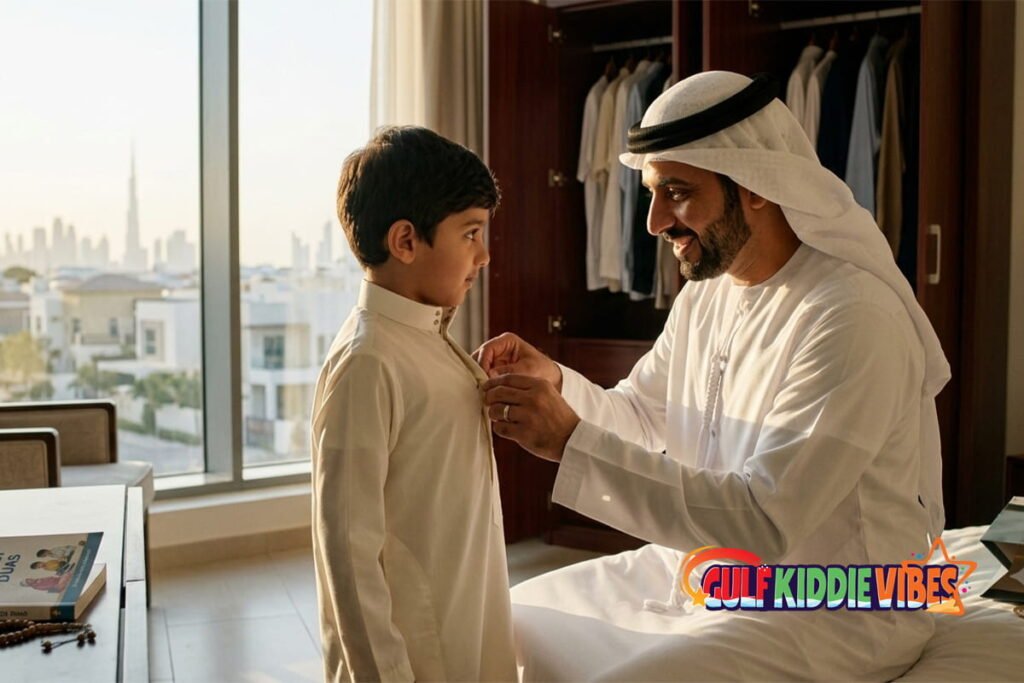
You might wonder why something as private as undressing requires a dua. The wisdom behind this is both spiritual and practical.
When you say Bismillah before removing your clothes, you’re seeking Allah’s protection. The Prophet ﷺ said: “The screen between the eyes of the jinn and the nakedness of the children of Adam when one of them removes his garment is to say: Bismillah.” (Sunan Ibn Majah)
This doesn’t mean jinn are constantly watching you. It means that by remembering Allah, you create a spiritual barrier. You’re placing yourself under Allah’s care even in your most vulnerable moments.
Saying Bismillah keeps you aware that Allah sees you even when no human does. This awareness naturally encourages modesty and good character, even in private.
Islam is not just about prayer and fasting. It’s about remembering Allah in everything. When you say Bismillah before undressing, even this basic human need becomes connected to your faith.
Important note on modesty:
While we’re discussing undressing, it’s important to maintain proper Islamic modesty. Change clothes in private spaces. Lower your gaze. Respect the boundaries Allah has set.
The beauty of these small duas is that they keep Allah in your heart throughout the day. From the moment you dress to the moment you undress, you’re never far from His remembrance.
Teaching children Islamic practices early helps build their faith. The dua for wearing clothes is one of the easiest ways to teach your kids about being grateful to Allah and remembering Him. It’s simple and practical.
The first step is introducing the dua in a way that makes sense to a child’s mind.
Instead of diving into complex religious concepts, use language they understand. You might say:
“When we wear new clothes, we say a special thank you to Allah. Just like you say thank you when someone gives you a gift, we thank Allah for giving us these clothes.”
Children love stories. Tell them that the Prophet Muhammad ﷺ, who was the best person ever, always remembered to thank Allah for his clothes. When kids hear that the Prophet ﷺ did something, they often want to copy him.
You can say: “Do you know what the Prophet ﷺ used to do when he wore new clothes? He would say a beautiful dua to thank Allah. Do you want to learn it too?”
For very young children (ages 3 to 5), just teaching them to say “Alhamdulillah” (praise be to Allah) when wearing something new is enough. As they get older (ages 6 and up), you can introduce the full dua gradually.
Now that they know about the dua, you can help them to memorize it and use it in daily basis. You need patience and creativity in this process.
Turn learning the dua into a game. Something like you can recite it together with a nice rhythm or melody. Or, you can break it into small parts and learn one section at a time. Repeat the game till they get the whole idea.
Positive reinforcement works wonders with children. When they remember to say the dua on their own, praise them genuinely:
“MashaAllah! You remembered to thank Allah for your new shirt. I’m so proud of you!”
You can also create a small reward system. For example, put a star on a chart every time they say the dua. After collecting a certain number of stars, they get a small treat or extra playtime.
Children imitate what they see more than what they hear. If you consistently say the dua when you wear new clothes, your children will naturally want to copy you. Say it out loud so they can hear you. Show them that this is a normal, everyday practice.
Make it visual:
You can use decorative Arabic calligraphy or fun illustrations to write the dua or you can order it from any site. Visual cues help children remember.
Consistency is the key to building habits. In the beginning, your child will need regular reminders. Over time, it will become automatic.
Link it to getting dressed: Every morning, gently remind them: “Don’t forget to say Bismillah before you get dressed!” or “Remember to thank Allah for your new clothes!”
Use gentle prompts:
Connect the dua to Eid, birthdays, or new school clothes. Special occasions make it more memorable
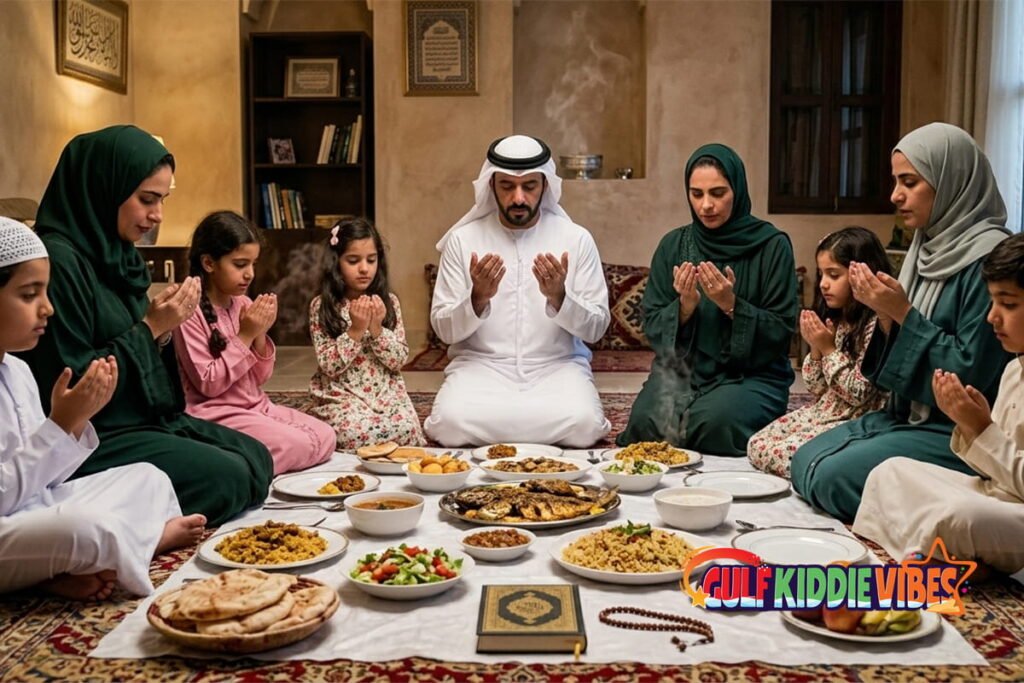
When someone gets new clothes, say the dua together at dinner time. Children feel part of something bigger.
Be patient: Some children learn quickly, others take months. Celebrate small progress—even once a week is progress.
Use real moments: When shopping together: “That’s a nice jacket! When you wear it first, remember to thank Allah with the dua.”
Many people memorize the Arabic without knowing the meaning. Understanding the words makes your dua more sincere and meaningful. Take time to learn the translation.
Some people worry: “Is this dua too feminine? Is it too masculine?” Don’t think about that. The dua uses words that work for everyone, boys and girls, men and women. Allah’s blessings are for everyone. So focus on being grateful, not on the words themselves.
Dua isn’t about automatic protection or instant results. It’s a conversation with Allah. Sincerity matters more than perfect pronunciation.
Just saying the dua isn’t enough. If you say it but then waste your clothes or complain about them, it doesn’t work. The dua should change how you act. Dua’s words should inspire you to take care of your blessings and be more mindful.
Everyone’s spiritual journey is different. Don’t stress if others recite more beautifully or remember better. What matters is your intention and effort.
Yes. You can make your own dua in your own words. Allah listens to sincere du’as from your heart.
Yes, you can pray in work clothes as long as they are clean enough for prayer. Dirt from honest work is not a problem in Islam. What matters is that your clothes are respectful for standing before Allah.
The Prophet ﷺ taught us to thank Allah for new clothes and say Bismillah when wearing them. This is an authentic teaching that reminds us all blessings come from Allah, and we should be grateful for them.
Reciting the dua for new clothes is more than words. It’s a way to live with gratitude. Every time you wear something new, remember that Allah gives all blessings.
The Prophet ﷺ showed us that small, everyday actions bring us closer to Allah. Make this dua part of your routine. Teach it to your children. Make it a family habit.
The next time you wear new clothes, say the dua. These small moments of remembrance turn ordinary actions into worship.
It’s not about being perfect. It’s about your intention. It doesn’t matter if your clothes are expensive or simple, the gratitude is the same. Allah cares about your sincere heart, not the price.
May Allah accept your duas and fill your heart with gratitude. Ameen.