Shopping for organic children’s clothing brands protects your child from harmful chemicals and shows them that quality beats quantity every time. Brands like Mini Rodini, Burt’s Bees Baby, and Patagonia Kids prove sustainable fashion can actually be stylish and affordable, plus there are six more becoming fashion icons in the eco-friendly space. You’ll learn to spot genuine organic certifications, compare what’s available, and pick options that make sense for busy parents in the UAE.
Shopping for kids’ clothes is overwhelming. You’ll find cotton, polyester, blends, fast fashion, and more. It’s overwhelming. But organic kids’ clothes stand out because they actually care about what touches your baby’s skin. Organic children’s wear is no longer just about safety; it’s reshaping kids’ fashion and style in a more thoughtful, responsible way.
I never thought much about where kids’ clothes came from until I became a parent. And I thought, if I’m this concerned about protecting my kids, why wouldn’t I be concerned about protecting the planet they’ll inherit?
Modern parenting has changed. We’re more cautious now. We read labels. We research brands. We ask ourselves tough questions: Is this safe? Is this ethical? Does this align with the values I want to teach my kids?
I decided I would never buy anything that harms nature or exploits people, simply because my kids are watching and learning. Choosing organic isn’t just about protecting them from chemicals; it’s about teaching them that the planet matters and our choices have consequences.
This blog covers everything you need to know about organic children’s clothing brands and why they’re worth your attention. You’ll learn how to spot authentic organic clothes, understand why organic beats regular fast fashion for your kids’ health, and get nine incredible brands that are changing kids’ fashion.
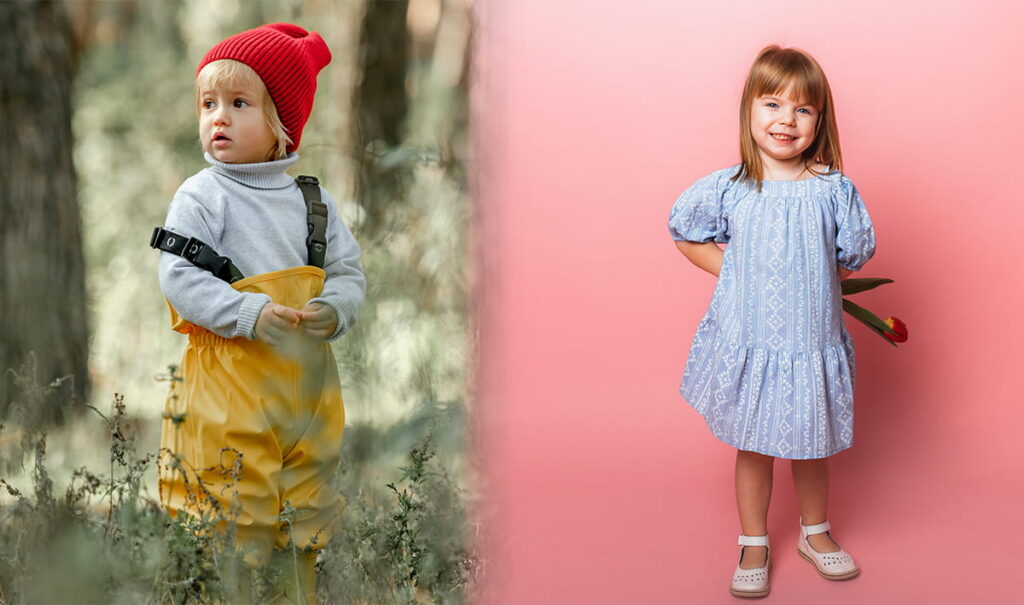
You might wonder what the big difference is between organic and regular kids’ clothes. On the surface, they look the same. They fit the same. But when you dig deeper, organic clothes win in almost every way that matters to your family.
Here are four reasons why switching to organic is actually a smart choice, not just a trendy one.
Regular clothes are treated with chemicals like flame retardants, heavy metals, and synthetic dyes. These stay in the fabric even after washing. Your baby wears these clothes every day against their sensitive skin, and their body absorbs these chemicals through the fabric. Over time, this can cause rashes, allergies, eczema, and breathing problems. Organic clothes skip all these treatments. Your baby’s skin stays clean and safe from day one.
Fast fashion falls apart quickly. Colors fade, seams rip, and elastic gets loose. An organic outfit costs more but lasts through multiple washes, multiple kids, and multiple years. You won’t need to shop as frequently, but when you do, you’re getting something that actually lasts.
Over time, that actually works out cheaper, plus you’re not adding to the mountains of textile waste piling up in landfills.
Conventional cotton uses massive amounts of water and pesticides that damage soil and pollute water. Organic farming supports natural systems, keeping ecosystems healthier.
Plus, when organic clothes eventually wear out, they break down naturally. Fast fashion synthetics take hundreds of years to decompose and fill oceans and landfills. Every organic purchase you make is a vote for a healthier planet.
If you’re curious how this shift is shaping the future, explore the latest eco-friendly kids’ clothing trends for 2026 and how sustainable dresses are evolving in the UAE.
When you choose organic, you teach your kids that quality matters more than having lots of things. You show them that taking care of clothes is important. You teach them that some choices hurt the planet and others help it. Kids learn by watching you. That lesson stays with them forever.
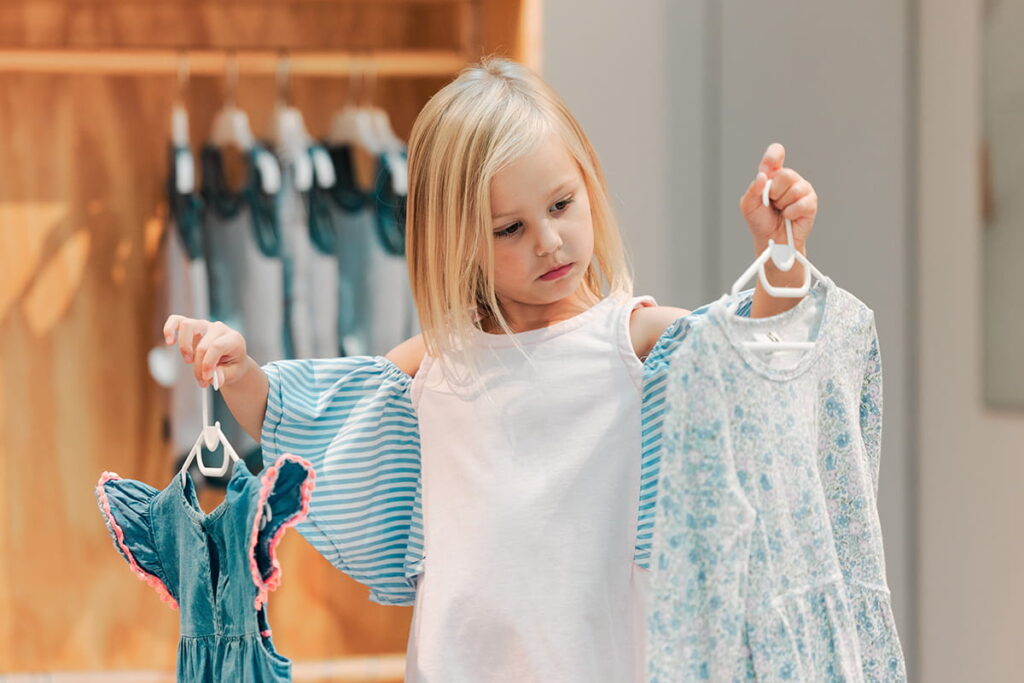
Whatever choices you make with kids’ clothes, one thing is certain. If you really want to buy organic, you will probably get caught buying fake ones first. It happens to most parents.
Brands use the word “organic” loosely, and it’s confusing. So if you want to save yourself from fake organic clothes, you need to know the details. You need to understand what you’re actually looking at when you open a product page or read a label.
Here are the signs that tell you if something is actually organic or just pretending to be.
The easiest way to spot real organic is to find GOTS certification on the label. GOTS stands for Global Organic Textile Standard. It means a third party checked the entire supply chain and verified it’s actually organic. No shortcuts. No greenwashing. If a brand claims organic but has no GOTS label, ask yourself why.
Organic cotton feels different from regular cotton. Run your hand over it. It’s softer but also heavier. It feels smooth and gentle against your skin. If something feels rough or scratchy, it’s probably not real organic.
Real organic clothes have almost no smell or a subtle earthy smell. If you open a package and get hit with a strong chemical smell, that’s a red flag. Those synthetic chemicals linger in the fabric and stay against your baby’s skin. Organic clothes don’t have that harsh factory smell.
Look for more than just GOTS. Certifications like OEKO-TEX, Fair Trade, or Bluesign are also good signs. A brand that has multiple third-party certifications is serious about being organic. They’ve invested time and money to get verified by different standards. One certification is good. Multiple certifications mean the brand is really committed.
Some brands say “organic blend,” but it’s only 10 percent organic mixed with 90 percent regular synthetics. Check if it says 100 percent organic cotton. That matters for your baby’s skin. A small percentage of organic in a mostly synthetic shirt isn’t worth it.
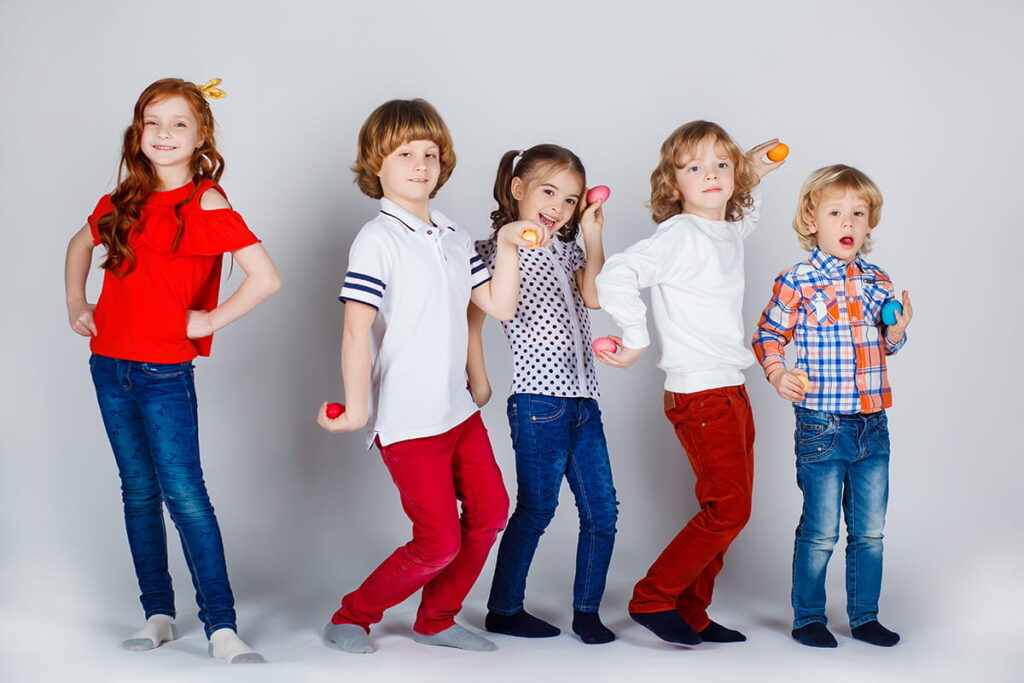
Not all organic clothing brands do things the same way. Some focus on wild designs. Some focus on affordability. Some focus on fair labor. Some focus on innovation. The brands below have each found their own way to make kids’ clothes better while caring about the planet and the people who make them. Here’s what makes each one different.
Available in UAE: Marmarland (Dubai), Nest For Kids, Farfetch
Mini Rodini is Swedish and known for colorful, playful designs that kids actually want to wear. They don’t make boring basics. They use recycled materials like polyester from PET bottles and nylon from fishing nets.
But their water-saving technology is something unique. They’ve saved millions of liters of water in production, which is massive.
Price range: 400 to 700 AED per piece
It is a Spanish brand that focuses on zero waste. They turn fabric scraps into accessories instead of throwing them away. They work with local manufacturers in Barcelona and recycle water in their workshops. Their designs are creative and modern. They prove that sustainable fashion can still look good.
Available at: Carrefour UAE, Amazon
This is the affordable organic option for families who want quality without the luxury price tag. Burt’s Bees Baby is American and keeps launching new product lines to stay fresh. They recently created their “honeysoft” collection. Their target audience is regular parents who can’t spend 500 AED on a single outfit. They prove that organic doesn’t have to be expensive.
Unique approach: Complete supply chain transparency
Patagonia publishes everything. They tell you exactly where clothes are made, who makes them, and what conditions workers are in. They also have their Worn Wear program, where you can get free repairs or resell clothes secondhand. It’s a circular approach. They guarantee all products will last with their Iron Clad Guarantee. If you care about knowing the full story behind your purchase, Patagonia is honest about theirs.
Brand type: Family-owned Dutch brand
Gray Label started small and stayed true to that vision. They make minimalist designs in muted, natural colors using low-impact dyes. Clothes are so neutral that siblings can share them. They just opened their first standalone store (Edition) at the end of 2025, showing they’re growing on their own terms. Their philosophy is “less is more,” and every piece reflects that.
Target audience: Parents who want to learn
Kate Quinn Organics does something most brands don’t: they educate. They run workshops about organic fabrics and sustainable parenting. Their website has detailed guides helping you make better decisions. They source the best organic materials and create simple, comfortable designs. They’re not just selling clothes. They’re building a community of informed parents who understand why their choices matter.
Specialty: Sustainable packaging and shipping
Organic Zoo keeps it simple. They make the basics your kid needs: t-shirts, rompers, leggings in organic cotton. But their packaging is completely recycled and biodegradable. They’ve committed to zero-waste shipping, meaning that even how they deliver the clothes to you matters. It’s a brand that thinks about environmental impact from every angle, not just the fabric.
Design philosophy: Comfort first
They focus on ultra-soft, GOTS-certified organic cotton designed to last through multiple children. Each piece is made without harsh chemicals or pesticides for maximum safety. What sets them apart is their practical design: easy zippers, snug fits, and features that work for active babies. They provide personalized options like custom stitching and curated gift boxes. The brand aims to give modern parents access to safe, stylish baby essentials that actually hold up over time.

Unique feature: Resale program and grow-with-me designs
Hanna Andersson has Scandinavian roots and years of experience making quality kids’ clothes. A lot of their stuff is designed to grow with your child, so pieces last longer than you’d expect. They run a resale program where you can buy and sell their clothes secondhand. It’s a practical way to be sustainable without making life harder for busy parents.
Organic costs more upfront but lasts longer. One quality of an organic outfit is that it survives multiple washes and kids. Buy one instead of three cheap ones, and you save money. Resell secondhand to get some money back. The investment pays for itself.
Kids care about comfort. Organic clothes are softer and less itchy. Kids with sensitive skin or eczema notice the difference immediately.
Mini Rodini and Bobo Choses are at Marmarland Dubai and luxury boutiques. Burt’s Bees Baby is at Carrefour. Most brands ship internationally through their websites or Farfetch. Check individual websites for shipping costs, as some charge customs duties.
GOTS means independent verification of organic standards. Without it, organic labels might be empty claims. GOTS confirms no harmful chemicals, fair labor, and sustainable practices. Choose certified products.
You’re not being a snob. Your baby absorbs chemicals through clothing daily. Organic eliminates that risk. These clothes last longer, save money over time, and support fair labor. It’s practical, not pretentious.
When I started researching organic children’s clothing brands, I assumed it was mainly about avoiding chemicals. The more I looked into it, though, the more I saw there was a lot more to it.
Every time I choose an organic children’s clothing brand, I’m making a statement about what I value. I’m telling my kids that their health matters. I’m telling the brands I support that ethics matter. I’m voting for a future where fashion doesn’t destroy ecosystems or exploit workers. The nine brands in this guide understand that responsibility. They’ve built their businesses on the belief that kids deserve better, and the planet deserves better.
Once you experience the quality of the cloth and know where it comes from, everything else becomes easier. Small choices add up. And one day, you’ll realize you’ve raised a child who knows that the clothes they wear are connected to the planet they live on and the people who make those clothes. That’s worth more than any trend or price tag.