Keep your child warm in winter through proper layering and the right gear. Use a thermal base layer to wick moisture, add a fleece middle layer for insulation, and finish with a waterproof jacket. Things you’ll want to have for winter include woolly socks, mittens, hats and lined boots. Keep an eye on your child’s neck and bring them back inside if they are shivering or moving sluggishly. Focus on the occasionally chilly rather than the extremely cold in Gulf countries. The right clothing makes it easy to keep your child safe and comfortable.
Winter hits differently depending on where you live. If you’re on the western side, you’re dealing with heavy snow, constant rain, and that harsh bitter cold. But over on the eastern side, it’s a whole different vibe with milder temperatures and plenty of fun outdoor activities for the kids.
Whether your child is playing in deep snow or enjoying a cooler afternoon, they need proper winter gear to stay safe and comfortable.
As a mum, I’ve been facing the same situation trying to keep my kids warm during winter. I know how stressful it can be when you’re not sure if your little one is dressed appropriately or if they’re going to catch a cold. Through my own experience and lots of trial and error, I’ve learned what actually works. I’m going to share everything I’ve discovered so far so that you can be helped and avoid the same mistakes I made.
Kids lose heat way faster than adults do. Their bodies are smaller, they get distracted while playing, and they don’t always tell you when they’re getting chilly. One minute they’re having fun outside, the next minute they’re shivering without even realizing it.
This guide covers everything you need to know about how to keep your child warm in winter from picking the right children cold weather clothing to understanding the layering tricks that actually work. You’ll learn about winter kids gear, proper clothing techniques, and the warning signs that tell you your child is getting too cold. I’ll walk you through all the child winter clothing essentials you need so you can confidently send your kids outside, knowing they’re warm and protected.
When I started planning my kids’ winter wardrobe, I realized I was overcomplicating things. You don’t need a massive collection. You just need the right pieces that do their job well.
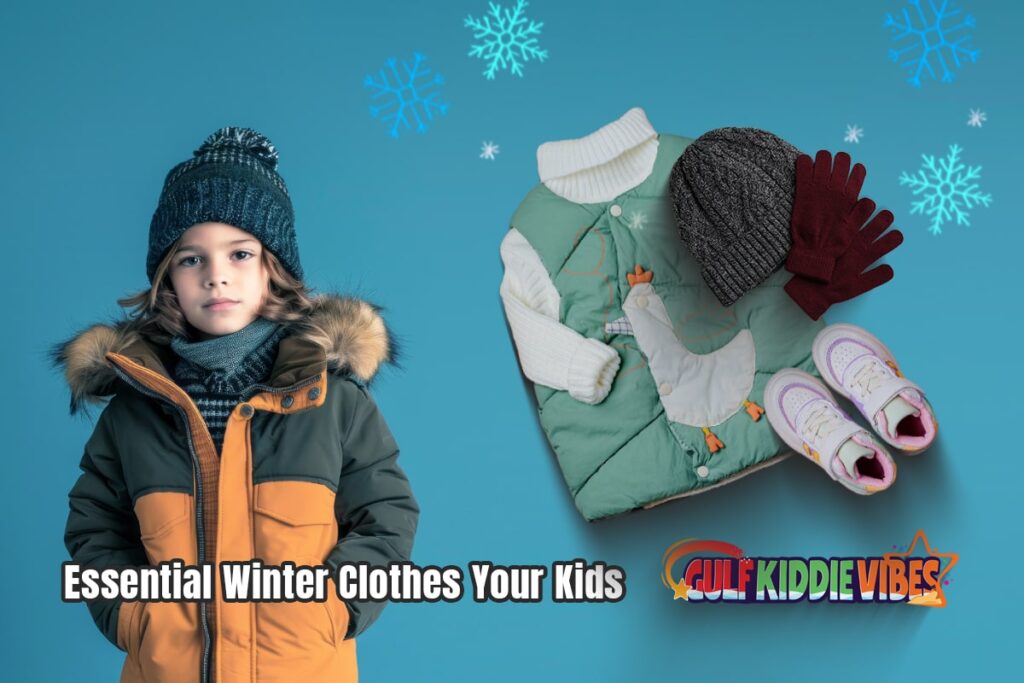
A good waterproof jacket for cold weather is your first thing to have.I realized this when my daughter complained about feeling sticky and uncomfortable in a regular fleece after just 30 minutes outside in the cooler weather. You’ll need at least two because one will inevitably get wet or muddy while the other is in the wash.
Polyester with sealed seams works best. Your child should be able to move their arms freely. My son’s jacket from a budget brand lasted two winters because of proper seam sealing and breathable fabric that prevents sweating inside.
Winter play means wet and muddy situations. Waterproof trousers that your child can get on and off without struggle are essential. I prefer dungarees for younger kids because they stay in place and cover the waist properly.
One pair is not enough if your child plays outside regularly. I’d suggest having two pairs so one is drying while the other is being worn. A soft inner lining makes a huge difference. When I switched from plastic-feeling trousers to ones with cotton or fleece lining, my kids actually wanted to wear them.
If you live in colder regions with snow or heavy rain, wellies with thermal lining for maximum warmth are something you’ll use constantly. Cold, wet feet will ruin your child’s entire outdoor experience. The sole should have good grip so your child doesn’t slip on icy surfaces.
But if you’re in warmer climates like Dubai where I live, thermal lined wellies have less use. Winter here is mild and rain isn’t as frequent, so regular non-insulated rain boots work just fine for the occasional drizzle. My kids barely wear them except during the rare rainy days.
You could skip the thermal lining altogether and just get standard waterproof boots that are lighter and more comfortable for warmer weather.
Beyond wellies, your child needs proper winter boots for snow and ice protection for everyday wear. Winter shoes should have insulation inside and a waterproof outer layer. My kids have one pair of insulated winter boots that we wear for school drop-offs and general outdoor activities.
Most people use regular cotton socks in winter, but they’re terrible because cotton absorbs moisture and stays damp. Get heavy, non-cotton socks that are wool blends or synthetic thermal socks. I buy thermal socks in packs of four or five because they get dirty quickly.
Waterproof gloves and mittens work better than regular ones because mittens keep fingers together for warmth. When hands get wet, the cold sets in instantly. My kids lose one mitten constantly, so I keep about six pairs around the house.
A warm hat for kids in winter is essential because kids lose heat through their heads. One hat isn’t enough because they fall off or get wet. I keep three hats in rotation. Cotton hats are useless. Go for wool or fleece lined options.
Neck warmers work better than scarves because they don’t slip off like scarves do. I use neck warmers for my kids because some of them hate scarves around their necks.
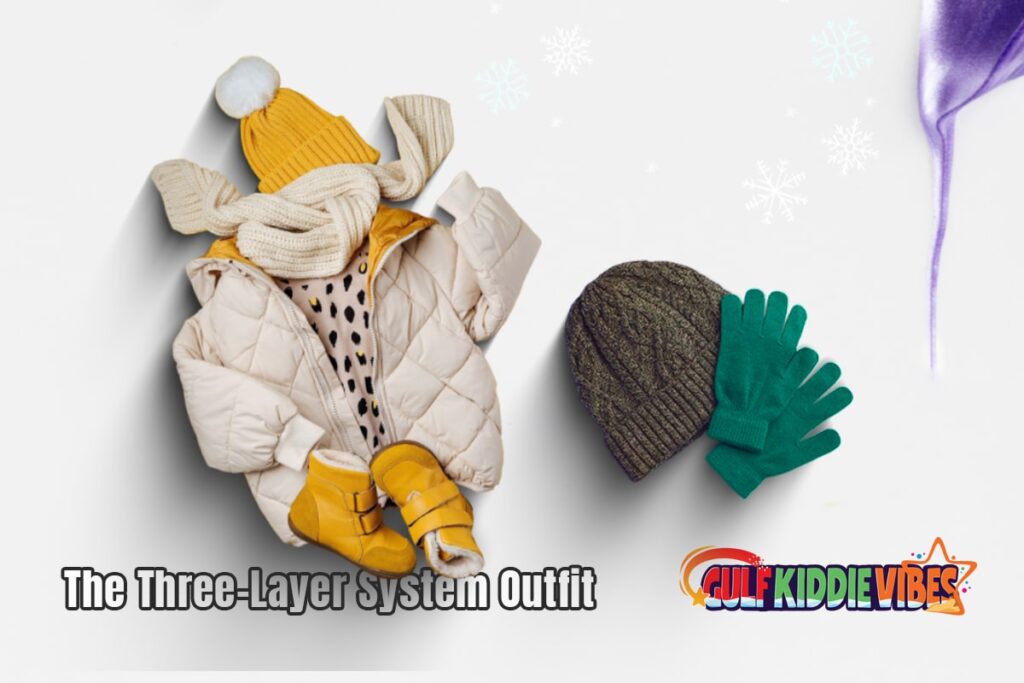
Three lightweight layers keep your child warmer than one thick coat. I used to bundle my kids up and they’d be uncomfortable and sweaty. Once I switched to layering,I feel relieved that they look okay, not like a big baggage I will travel with!
The base layer sits directly against your child’s skin and pulls moisture away from the body. When kids play outside, they sweat. If that sweat stays on their skin, it makes them cold. A good base layer stops this from happening.
Merino wool and synthetic fabrics work well for base layers. I thought merino wool would be itchy, but my kids don’t complain about it at all. Synthetic thermal fabrics work just as well and cost less. Cotton is a no-go because it holds moisture instead of moving it away.
Go for snug base layers because they work properly against the skin. Loose base layers won’t pull moisture away effectively. My daughter’s first base layer was too baggy and she still felt cold.
Fleece and wool trap air and create insulation. Fleece is lightweight and easy to wash, which is perfect for kids. Wool is warmer but takes longer to dry. I prefer fleece because my kids come inside soaked and I need something that dries fast.
This layer should be loose enough that it doesn’t squeeze the base layer underneath. A good middle layer lets your child move freely while keeping warmth trapped inside.
The outer layer protects against wind, rain, and snow. It doesn’t add warmth itself. Instead, it stops the cold from reaching the layers underneath.
Waterproof jackets and trousers work for this layer. They need to be breathable so sweat can escape. Plastic-like fabrics trap moisture and make your child cold and damp.
The seams should be sealed to keep water out. The coat needs to fit properly so cold air doesn’t get in around the edges. My son’s oversized coat let cold air in from the sides and everything fell apart.
I dress my daughter in a thin thermal top, then add a fleece jacket over it with dungarees. That’s it. She’s ready for school or playdates and stays warm the whole day without feeling bulky.
Related: How to Make Winter Clothes Activities for Kids at Home
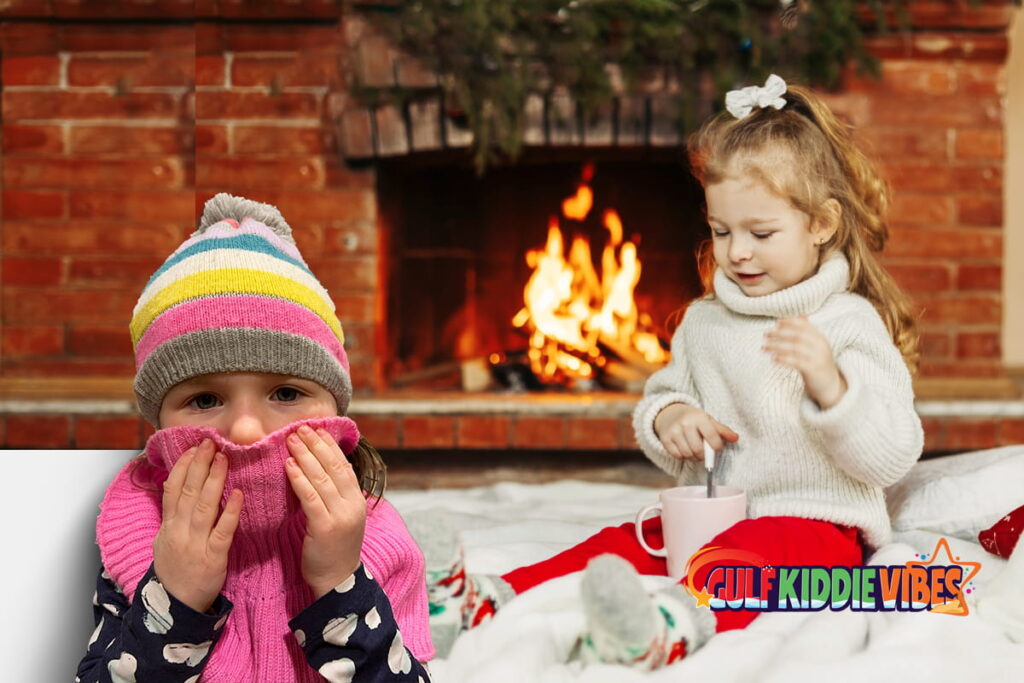
Your child might not tell you they’re cold. They get distracted playing and ignore their own discomfort. Watch for these early signs.
Shivering is the first sign. When your child shivers, their body is trying to generate heat. Complaining about being cold is obvious, but some kids won’t say anything.
When we visit the UK for holidays, my kids get too cold quickly. They move slower and lose interest in playing. My son just stops running around and stands there when he’s cold. Their hands and feet feel cool naturally, but if they say their fingers are numb or keep asking to come inside, bring them in right away.
Frostbite is when the cold actually starts damaging their skin. This usually only happens in places with really harsh winters, tons of snow, and temperatures that stay below freezing for long periods. If your child is out in that kind of extreme cold without proper gear, their skin can start to freeze.
Frostbite happens in stages.
Frost nip is the first stage where exposed skin on cheeks, nose, ears, and fingers turns red and tingly. Your child might say their skin feels prickly. If your child comes inside with red, puffy cheeks or a bright red nose, this is frost nip. Move them to a warm room but not extreme heat.
Second-degree frostbite causes blistering and pain. Third-degree frostbite turns skin white or gray and feels hard. If you spot these signs, get medical help right away. Don’t mess around with it.
In Gulf countries, you’re really just dealing with the occasional chilly day, so just focus on keeping your child comfortable. Serious cold injuries aren’t something you need to stress about here.
Hypothermia is way scarier than frostbite because it affects their whole body, not just their skin. It happens when they get so cold that their body basically stops working properly.
In Gulf countries, hypothermia is almost impossible because winter temperatures stay mild. Even during the coldest months, it rarely gets cold enough for hypothermia to develop.
This occurs in regions with prolonged extreme cold, wet conditions, and temperatures near or below freezing.
If your child is shivering constantly and acting confused or really sleepy, that’s a warning sign. They might slur their words or move slowly. As it gets worse, the shivering actually stops, they become extremely drowsy, and their movements get weak and clumsy. Their skin might look pale or bluish.
If you see any of this happening, get your child inside immediately. Take off any wet clothes and wrap them in warm blankets. Call a doctor or emergency services right away. Don’t wait around.
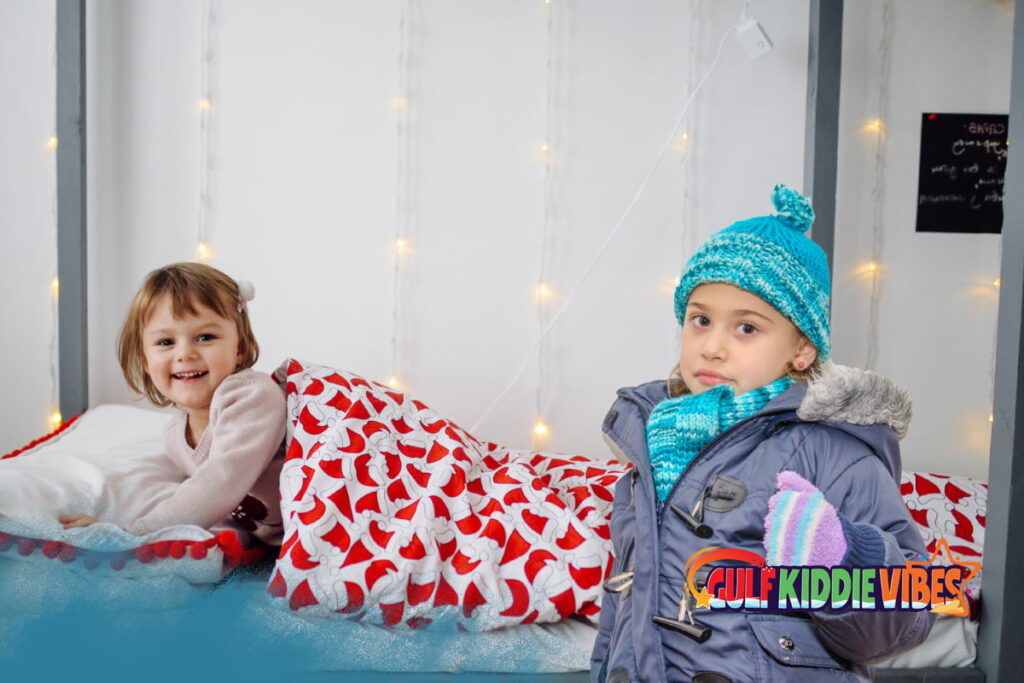
Getting your child’s bedroom set up properly for winter is one of those things that seems simple but actually makes a huge difference in their sleep quality. When the bedding and temperature are right, your child sleeps through the night comfortably without waking up cold or sweaty.
I learned that layers work so much better than one thick blanket. Your child can adjust their warmth throughout the night depending on how they feel. I use a lightweight quilt with a cotton sheet underneath, and my kids sleep so much better that way.
My daughter has a fleece blanket over her regular duvet and it’s warm without feeling heavy or suffocating. My son prefers just the quilt without extra layers because he gets hot easily at night.
I keep the bedroom door slightly open so air can move around, and I avoid putting anything loose like bumpers or toys that could trap heat around their faces.
Before bed and during the night, I check the back of their necks to see if they’re sweating or feeling cold. If they’re sweaty, I remove a blanket. If they’re cold, I add one. For babies under one year, I don’t use pillows or heavy blankets at all. Just a fitted sheet and a sleep sack keeps them safe and warm.
Temperature control is just as important as bedding. I realized this when my kids kept waking up uncomfortable no matter what blankets I used.
Check their neck or between shoulder blades. Warm and dry means they’re fine. Sweating means remove a layer. Cold skin means add more. Don’t check hands and feet because they’re naturally cooler.
No. Bulky coats reduce harness protection. Dress them in layers, then put the coat on after buckling. Remove the coat when you arrive.
Every 15 to 20 minutes during outdoor play. Numb or cold hands mean bring them inside. My son ignores being cold, so I check without asking.
Spare thermal socks, mittens, and a hat. Pack dry clothing, hand warmers, and a thermos with hot drinks. Keep a blanket in your car. These items save the day if your child gets stuck outside longer than expected.
Honestly, winter in Gulf countries is such a gift. In places with harsh winters, kids are stuck indoors for months. But here, our winters are mild so your kids can be outside playing and exploring without fear of frostbite or hypothermia. Parents dealing with real harsh winters would love to have what we have.
All you need is the right gear and proper layering. Thermal base layers, a fleece middle layer, and a waterproof jacket keep your child warm and comfortable. Now you know how to keep your child warm in winter. Monitor them regularly, dress appropriately for transitions between indoors and outdoors, and you’re done.
Your child can enjoy winter adventures safely. Proper clothing, basic layering knowledge, and watching for warning signs are all you need. Make winter fun, not stressful.